1,1′-Carbonyldiimidazole (CDI), CAS 530-62-1, is an off-white crystalline powder used as a carbonyl-transfer and carboxylic acid activating reagent. It converts carboxylic acids into acyl imidazoles that react with amines, alcohols and other nucleophiles to give amides, esters, ureas and carbonates, with imidazole and carbon dioxide as the only by-products. PolyBlueChem supplies CDI at assay 98.0% min (GC) with a melting range of 116.0-122.0 deg C, packed under dry conditions with per-batch COA and SDS.
Specifications
| Property | Specification |
|---|---|
| Appearance | Off-white crystal powder |
| Melting point (deg C) | 116.0 – 122.0 |
| Assay (GC, %) | Min 98.0 |
| Packaging | 25 kg fibre drum with double PE liner; smaller packs on request |
Basic Information
| Chemical name | 1,1′-Carbonyldiimidazole (N,N’-carbonyldiimidazole) |
| Abbreviation | CDI |
| CAS number | 530-62-1 |
| Molecular formula | C7H6N4O |
| Molecular weight | 162.15 g/mol |
| Appearance | Off-white crystal powder |
| Melting range | 116.0 – 122.0 deg C (with decomposition) |
| Assay | Min 98.0% (GC) |
| Functional class | Carbonyl transfer reagent; carboxylic acid activator |
How It Works
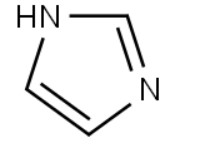
CDI reacts with a carboxylic acid to form an acyl imidazole, releasing imidazole and carbon dioxide. The acyl imidazole is an activated intermediate: an amine attacks it to give the amide, an alcohol gives the ester, and a second amine gives a symmetrical urea. Because imidazole is water-soluble and carbon dioxide leaves as a gas, work-up is usually a simple aqueous wash – no dicyclohexylurea to filter, no difficult urea by-product to remove.
The same chemistry makes CDI a carbonyl source: with two equivalents of amine it builds symmetrical ureas, with a diamine and a diol it builds cyclic carbonates, and with an amino alcohol it forms oxazolidinones. This is why CDI appears in pharmaceutical process chemistry far more often than its price suggests.
Typical Applications
- Amide and peptide coupling – activation of carboxylic acids for reaction with amines, including solution-phase peptide synthesis.
- Urea and carbamate synthesis – symmetrical and unsymmetrical ureas, carbamates and cyclic carbonates.
- Esterification – activation of acids towards alcohols, including hindered substrates.
- Pharmaceutical intermediates – acylation, carbamoylation and heterocycle construction; oxazolidinone and hydantoin routes.
- Polymer and bioconjugate chemistry – activation of polymer-bound acids, PEGylation and crosslinking of hydroxyl- or amine-functional polymers.
- Nucleoside and nucleotide chemistry – selective acylation and carbamoylation of hydroxyl groups.
Handling and Storage – Critical
| Point | Guidance |
|---|---|
| Moisture | CDI hydrolyses on contact with water, giving imidazole and CO2. It must be stored and weighed under dry conditions, with dry solvents in reactions |
| Storage temperature | Cool, dry place; refrigeration is recommended for long-term storage and for opened containers |
| Container | Keep the original drum sealed with the liner intact; reseal immediately after use and consider desiccant |
| Assay drift | A drop in assay and a melting point below the specification usually mean moisture ingress – reject the lot rather than compensating with excess reagent |
| Ventilation | Reactions release carbon dioxide; use vented equipment and do not seal reactions tightly |
| Personal protection | Gloves, eye protection and dust control – the powder is an irritant and a sensitiser in handling |
Packaging and Documentation
Supplied in 25 kg fibre drums with a double polyethylene liner, or in smaller packs for laboratory and pilot use. Each batch ships with a COA covering appearance, assay by GC and melting range; SDS is available in English. Because the product is moisture sensitive, packaging integrity is part of the specification – inspect liners on arrival and store the drum sealed.
Related reading
- 1,1′-Carbonyldiimidazole (CAS 530-62-1): properties, production and applications
- CDI in peptide synthesis and amide bond formation
- CDI vs DCC vs EDC vs HOBt: choosing a coupling reagent
- 1-Hydroxybenzotriazole hydrate (HOBt): properties and applications
FAQ
What is the CAS number of CDI? CAS 530-62-1.
Why must CDI be kept dry? It hydrolyses with water to imidazole and carbon dioxide, which lowers the assay and consumes reagent before it reaches the acid. A wet lot shows a melting point below 116 deg C.
What residues does CDI leave in the product? Imidazole (water-soluble, removed by aqueous wash) and carbon dioxide (leaves as gas). No urea by-product, unlike carbodiimide reagents.
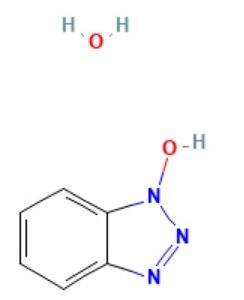
Is CDI suitable for peptide coupling? Yes, particularly in solution-phase work; for racemisation-sensitive couplings it is normally used with an additive such as HOBt.
Contact PolyBlueChem for specifications, samples and quotations.