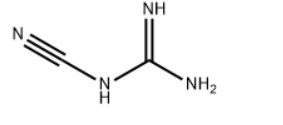
Dicyandiamide (DICY), CAS 461-58-5, is a white crystalline latent curing agent for epoxy resins and a nitrification inhibitor for agriculture. PolyBlueChem supplies PREMIUM GRADE dicyandiamide: purity 99.5% min, moisture 0.3% max, ash 0.05% max, calcium 200 ppm max, melting point 209-212 deg C, with an impurity precipitation test against a standard melamine solution. Registered under EU REACH – documentation available for European customers.
Specifications
| Property | Specification |
|---|---|
| Appearance | White crystalline |
| Purity (%) | Min 99.5 |
| Moisture (%) | Max 0.3 |
| Ash content (%) | Max 0.05 |
| Calcium content (ppm) | Max 200 |
| Melting point (deg C) | 209 – 212 |
| Impurity precipitation test | Precipitation not higher than standard melamine solution |
| Grade | PREMIUM GRADE |
| Regulatory | Registered under EU REACH |
| Packaging | 25 kg net bag with inner liner; 500-1000 kg jumbo bags on request |
Basic Information
| Chemical name | Dicyandiamide (cyanoguanidine, 1-cyanoguanidine) |
| Abbreviation | DICY, DCD |
| CAS number | 461-58-5 |
| Molecular formula | C2H4N4 |
| Molecular weight | 84.08 g/mol |
| Appearance | White crystalline powder |
| Melting range | 209 – 212 deg C (with decomposition) |
| Grade | PREMIUM GRADE |
| Function | Latent epoxy curing agent; nitrification inhibitor; chemical intermediate |
Why the Specifications Matter
Dicyandiamide looks like a simple commodity, but four of the numbers on this datasheet decide whether it works in a demanding application:
- Calcium max 200 ppm – calcium ions interfere with the epoxy cure and are tightly controlled in laminates for electronics. A high-calcium lot can cure at the wrong rate or leave ionic contamination; this is the specification that separates electronics-grade material from agricultural grade.
- Impurity precipitation test – a turbidity comparison against a standard melamine solution. Dicyandiamide is made from calcium cyanamide, and the process can carry melamine-type and urea-type by-products. The test is a practical proxy for those impurities.
- Moisture max 0.3% – water affects both storage stability and the epoxy cure; free moisture in a one-pack adhesive is a shelf-life problem.
- Ash max 0.05% – inorganic residue; relevant for electrical laminates and for anything where ionic cleanliness matters.
Purity 99.5% min and melting point 209-212 deg C confirm the identity and the absence of the main organic impurities.
Typical Applications
- One-pack epoxy adhesives – latent curing at 160-180 deg C, with accelerators bringing the cure down to 120-130 deg C for heat-sensitive assemblies.
- Prepregs, laminates and copper-clad board (FR-4) – the standard latent curing agent for electrical laminates, where calcium and ash limits are critical.
- Powder coatings – latent cure in a solid system where the curing agent must not react during extrusion.
- Nitrification inhibitor in fertiliser – slows the conversion of ammonium to nitrate, reducing nitrogen loss and leaching.
- Chemical intermediate – guanidine, guanamine and melamine derivatives; pharmaceutical and agrochemical building blocks.
- Flame retardancy and textile/leather auxiliaries – nitrogen-rich chemistry used as a synergist and in finishing formulations.
REACH Registration
This grade is registered under EU REACH. For European customers that means the substance is covered by a registration dossier and can be supplied with the documentation your compliance team needs – instead of a supplier who can ship the material but cannot support the registration requirement. If you need the registration number and the dossier summary for your own compliance file, ask at enquiry stage.
Handling and Storage
| Point | Guidance |
|---|---|
| Storage | Dry, ventilated area; keep bags sealed – moisture absorption affects both the moisture specification and the cure behaviour |
| Temperature | Ambient storage is adequate; avoid prolonged exposure above 40 deg C |
| Dust | Fine crystalline powder – use local exhaust ventilation and dust masks when handling open bags |
| Incompatibility | Keep away from strong oxidisers and acids |
| Shelf life | Use within the period stated on the COA; re-test moisture if a bag has been open for a long period |
Packaging and Documentation
Supplied in 25 kg net bags with an inner PE liner, or 500-1000 kg jumbo bags for compounders and laminate producers. Each batch ships with a COA covering appearance, purity, moisture, ash, calcium, melting range and the impurity precipitation test; SDS is available in English. REACH registration documentation is available for European customers on request.
Related reading
- Dicyandiamide: chemical properties, manufacturing and applications
- Dicyandiamide as a latent epoxy curing agent
- Dicyandiamide in adhesives, prepregs and laminates
- Dicyandiamide vs other latent curing agents
- Dicyandiamide as a nitrification inhibitor in fertiliser
FAQ
What is the CAS number of dicyandiamide? CAS 461-58-5.
Why is calcium limited to 200 ppm? Calcium interferes with the epoxy cure and is a contamination marker in electrical laminates. Agricultural use does not need this limit; electronics-grade material does.
Is this grade REACH registered? Yes – the grade we supply carries an EU REACH registration, and the documentation is available on request.
What accelerator is used with it? Imidazoles, substituted ureas and boron-amine complexes are the common choices, each with a different cure profile and pot life. See the comparison article for the trade-offs.
Contact PolyBlueChem for specifications, samples, COA and REACH documentation.