Strong base anion exchange resin (SBA) carries quaternary ammonium groups and is the only anion resin that removes weak acids – carbon dioxide and, critically, silica. That is why it is the second stage of any full demineralisation train: the cation resin has already converted salts to acids, and the strong base resin takes those acids out. Values below are typical for the type; exact figures are confirmed on the grade data sheet.
Typical specification
| Parameter | Typical value | Note |
|---|---|---|
| Polymer matrix | Styrene-divinylbenzene, gel or macroporous | Gel for clean water and high capacity; macroporous for organics and cycling duty |
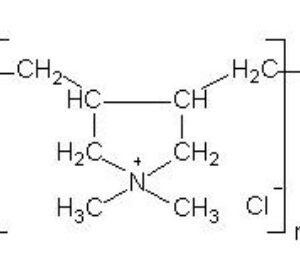
| Functional group | Quaternary ammonium (Type I: trimethylammonium; Type II: dimethyl ethanol ammonium) | Type I is more strongly basic and removes silica better; Type II regenerates more efficiently |
| Ionic form as shipped | Chloride (Cl-) or hydroxide (OH-) | The chloride form is more stable in storage; the hydroxide form is ready for service |
| Total exchange capacity | Of the order of 3.6 mmol/g dry, or 1.0-1.4 eq/L wet, in the chloride form | Lower than a cation resin of similar crosslink because the functional group is heavier |
| Moisture content | About 40-50% | Varies with form and with Type I versus Type II |
| Crosslink (DVB) | About 7-8% | Affects selectivity and the kinetics of silica uptake |
| Particle size | About 0.315-1.25 mm | Uniform grades are standard in condensate polishing |
| Wet true density | About 1.06-1.11 g/mL (Cl form) | Lower than cation resins, which matters in mixed beds for backwash separation |
| Swelling, Cl to OH | Of the order of 15-20% | Greater than a strong acid resin – allow for it |
| Operating pH | 0 – 14 | Fully functional as a strong base across the range |
| Maximum operating temperature | About 60 deg C in the OH form; higher in the Cl form | The critical limit – hydroxide-form anion resin degrades above it and the loss is permanent |
Type I versus Type II
| Property | Type I | Type II |
|---|---|---|
| Basicity | Stronger | Slightly weaker |
| Silica removal | Better, and more consistent at low concentration | Adequate but generally less complete |
| Regeneration efficiency | Lower – typically several times stoichiometric caustic | Higher – often much closer to stoichiometric |
| Organic fouling | More prone | Somewhat more tolerant |
| Temperature stability | Generally better at the same conditions | More sensitive |
| Typical use | Demineralisation where silica matters, ultrapure water | Where caustic cost dominates and silica is not critical |
Why strong base is the only option for silica
Silica is a very weak acid – it is only partially ionised even at neutral pH, and essentially unionised at low pH. A weak base resin, which works by protonating in acid solution, cannot take it up. A strong base resin in the hydroxide form raises the local pH at the exchange site and can therefore remove silica down to the parts-per-billion range that high-pressure boiler and semiconductor water require.
| Contaminant | Weak base resin | Strong base resin |
|---|---|---|
| Chloride, sulphate, nitrate | Yes, efficiently | Yes |
| Carbon dioxide | Largely no | Yes |
| Silica | No | Yes – this is the reason to pay for strong base |
| Organic acids | Partly, with macroporous grades | Yes |
Applications
| Application | Configuration | Note |
|---|---|---|
| Demineralisation, second stage | OH form after a strong acid cation resin | Removes the mineral acids and the silica |
| Ultrapure water | OH form, often uniform particle size, in a polishing mixed bed | Tight conductivity specification; temperature control matters |
| Condensate polishing | OH form, uniform particle size, high flow | Kinetics and pressure drop both matter |
| Nitrate and perchlorate removal | Cl form, selective grades | Regeneration and brine disposal are the constraints |
| Organic removal with anion exchange | Macroporous Type II or acrylic-based | Adsorption contributes alongside ion exchange |
Regeneration and the temperature trap
Regenerated with sodium hydroxide, at a dose well above stoichiometric for Type I because the reaction is fought against a favourable equilibrium. Caustic strength and temperature during regeneration both influence how completely silica is removed – which is why regeneration conditions, not just dose, appear in the operating procedure.
| Point | What goes wrong | What to do |
|---|---|---|
| Operating above the temperature limit in OH form | Permanent loss of strong base capacity; conductivity rises after regeneration and never recovers | Cool the stream, or accept a shorter resin life; check the limit for the specific grade and form |
| Insufficient caustic | Silica is not fully eluted, so it leaks early in the next cycle | Raise caustic dose or temperature within limits; monitor silica after regeneration |
| Organic fouling | Capacity and kinetics both fall; rinse water demand rises | Macroporous grades, caustic-brine cleaning, and upstream organics removal |
| Free chlorine in the feed | Oxidative degradation of the quaternary ammonium group | Bisulphite dosing or carbon filtration upstream |
Supplied moist in bags, drums or bulk, in the chloride or hydroxide form depending on grade and shipping requirement. Store sealed and frost-free; the hydroxide form has a finite shelf life. For the full selection framework see the ion exchange resin selection guide, and for the demineralisation configuration demineralisation and ultrapure water.